


How to Help Bilingual Kids Read in English: 4 Stress-Free Home Strategies
The Bilingual Reading Challenge
Raising a bilingual or dual-language child is a rewarding journey, but it comes with unique literacy hurdles. When young children learn to read in English as a second language, they must process vocabulary, grammar syntax, and pronunciation all at once.
This extra cognitive processing can lead to vocal hesitation, translation delays, or reading fatigue. When reading out loud in English feels stressful, children often retreat to their primary language or avoid reading practice altogether.
Parents can help English language learners build fluent reading habits by replacing high-pressure drills with supportive, multi-sensory storytelling tools.
1. Use Visual Character Anchors to Bridge Language Gaps
Visual context is essential for English language learners. When children encounter unfamiliar English words, seeing those words directly paired with clear illustrations helps them grasp sentence meaning without needing real-time translation.
Effective esl reading activities for elementary kids include:
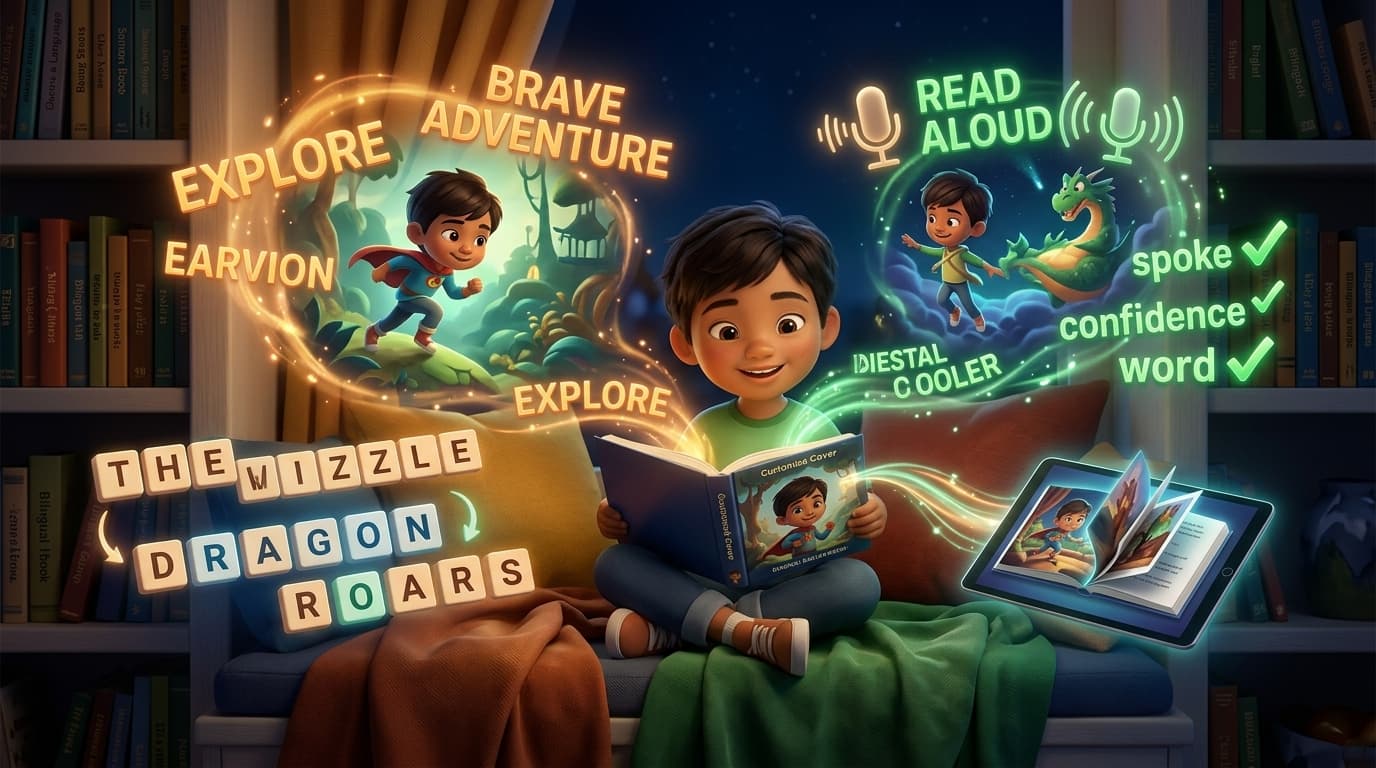
• Visual Avatar Alignment: Feature an exact cartoon version of your child across every page illustration to maintain deep personal engagement.
• Contextual Scene Matching: Ensure story scenes visually demonstrate sentence action, helping young readers infer meaning naturally through plot context.
2. Build English Sentence Structure with Interactive Drag-and-Drop Quests
English grammar rules—such as word order and verb tenses—can feel confusing for kids accustomed to different native language structures. Memorizing dry grammar rules in workbooks rarely translates into natural reading fluency.
Transforming sentence mechanics into hands-on puzzles helps bilingual children master English syntax naturally:
• Sentence Rearranging: Scramble English story sentences and challenge your child to place the words in correct grammatical order.
• Fill-in-the-Blank Quests: Omit key verbs or adjectives from a passage and let your child test different word choices to complete the story.
3. Practice Vocal Pronunciation with Private Audio Feedback
Bilingual children often hesitate to read English aloud due to fear of mispronouncing words or speaking with an accent. Practicing in front of peers or parents can trigger performance anxiety.
Allowing children to record their voice reading short English passages privately gives them a safe space to experiment with speech. Automated speech feedback tools evaluate pronunciation privately, highlighting correctly spoken words in green and offering non-judgmental tips for improvement.
4. Connect Digital Storytelling with Physical Printed Keepsakes
Bridging digital practice with physical reading builds lasting language pride. Interactive 3D digital flipbooks with page-turning physics keep tech-savvy kids engaged during daytime practice.
Following up with custom physical hardcover books starring your child creates tangible proof of their English reading progress. Displaying physical books on bedroom shelves reinforces their identity as a successful bilingual reader.
Empower Your Dual-Language Learner with Littale
Learning how to help bilingual kids read in English is simple and rewarding with the right edutainment platform. Littale.com provides an engaging environment designed to build English reading confidence.
Parents can transform their child's photo into a custom cartoon hero in under 3 minutes, generating a complete 22-page personalized storybook. Equipped with 5 interactive AI Learning Quests—including Read Aloud speech analysis, Sentence Rearrange, True/False, Fill-in-the-Blanks, and Multiple Choice—Littale gives English language learners immediate visual feedback. Delivered in high-quality print via Lulu.com, Littale helps bilingual children become fluent, confident readers.
Comments(0)
No comments yet. Be the first to share your thoughts.