


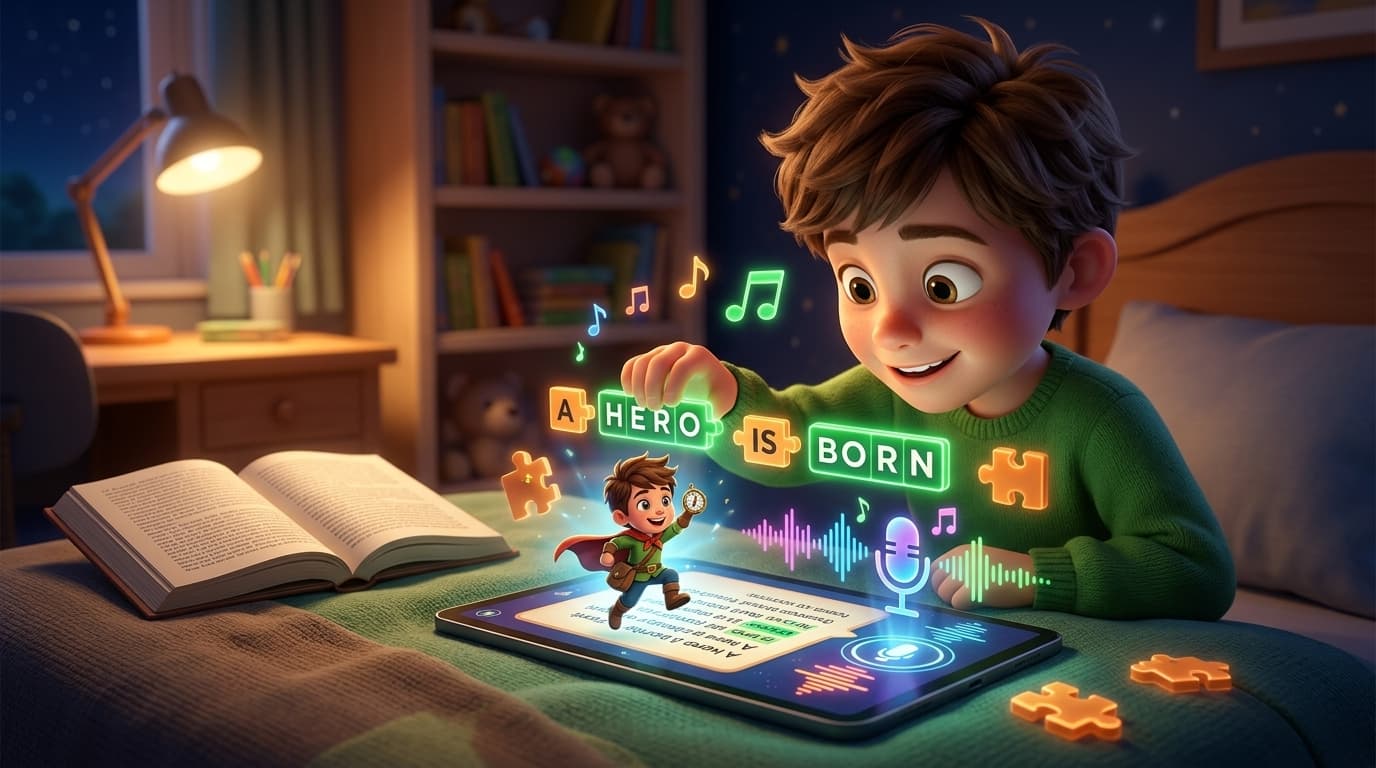
How to Help a Child with Dyslexia Read at Home: 4 Multisensory Strategies
Overcoming the Dyslexia Reading Hurdle
For children with dyslexia, converting printed letters into speech sounds requires intense mental energy. Traditional reading instruction—which relies heavily on dense text blocks and repetitive rote drills—often leads to rapid cognitive fatigue, low self-esteem, and severe reading avoidance.
Dyslexia is not a reflection of intelligence; it is a neurological difference in how the brain processes language. Dyslexic readers thrive when learning engages multiple senses simultaneously, connecting visual, auditory, and kinesthetic pathways.
Parents can transform home reading sessions from stressful battles into empowering wins by using targeted multisensory strategies.
1. Leverage Visual Character Anchors to Reduce Cognitive Load
Children with dyslexia often struggle to follow complex narrative arcs when they spend all their energy decoding individual words. Providing strong visual anchors helps dyslexic learners stay grounded in the plot structure without getting lost.
Using personalized dyslexia friendly reading strategies includes:
• Visual Protagonist Consistency: Featuring an exact cartoon version of your child across every single page illustration keeps visual attention focused on the action.
• Illustration-Text Alignment: Ensuring every full-page illustration directly matches the sentence mechanics on decorated text pages reinforces context clues.
2. Use Audio-Visual Speech Matching with Private Voice Practice
Connecting spoken words directly with written text is fundamental for dyslexic readers. Hearing words pronounced accurately while seeing them highlighted on paper builds strong phonetic pathways.
Interactive multisensory reading activities should give children a low-anxiety space to practice vocalization:
• Private AI Voice Diagnostics: Allow your child to record their voice reading a short passage into a private tool that analyzes speech accuracy without live audience pressure.
• Color-Coded Pronunciation Feedback: Display green highlights for correctly read words and orange highlights for mispronounced words so kids receive instant visual feedback.
3. Break Text into Interactive Sentence-Building Puzzles
Staring at an unbroken wall of paragraph text causes visual crowding for children with dyslexia. Transforming sentences into movable, hands-on puzzles turns reading into a kinesthetic game.
Challenge your child with drag-and-drop fun phonics games for dyslexic kids:
• Sentence Rearranging: Scramble 4 or 5 sentence strips from a story chapter and have your child order them chronologically based on plot logic.
• Context Fill-in-the-Blanks: Remove target vocabulary words and let your child test different options to complete the sentence naturally.
4. Replace High-Stakes Testing with Gamified Micro-Quests
Traditional end-of-chapter quizzes provoke intense anxiety in neurodivergent readers. Breaking comprehension checks into short, gamified micro-quests removes test pressure while rewarding effort.
Using non-punitive scoring systems out of 100 points allows kids to re-try quests, turning mistakes into positive learning opportunities.
Empower Dyslexic Learners with Littale
Discovering how to help a child with dyslexia read at home requires tools designed for active, multisensory engagement. Littale.com brings these strategies together in an intuitive edutainment platform.
With Littale, parents can convert their child's photo into a custom cartoon hero starring across a complete 22-page storybook generated in under 3 minutes. Every custom storybook features 5 interactive AI Learning Quests—including Read Aloud speech diagnostics, Sentence Rearrange, True/False, Fill-in-the-Blanks, and Multiple Choice challenges. Combined with 30-day photo deletion privacy rules and physical print-on-demand books via Lulu.com, Littale empowers every child to become a confident, successful reader.
Comments(0)
No comments yet. Be the first to share your thoughts.