


Beyond Passive Screen Time: How Interactive Reading Quests Build Real Comprehension in Kids
The Frustration of Passive iPad Scrolling
Every parent knows the feeling. You hand your child a tablet hoping for a quiet twenty minutes, only to watch them slide into a state of mindless scrolling. Videos play automatically one after another, vivid colors flash across the screen, and their mind stays completely on autopilot.
When you try to replace that screen time with a traditional book or a stack of reading worksheets, you are met with heavy sighs, fidgeting, and immediate resistance. Standard reading can feel slow and demanding compared to the high-energy excitement of digital games and short video clips.
The solution is not to ban screens entirely or turn technology into a constant battleground. The real breakthrough happens when you transform how kids interact with their digital devices, replacing passive consumption with active participation.
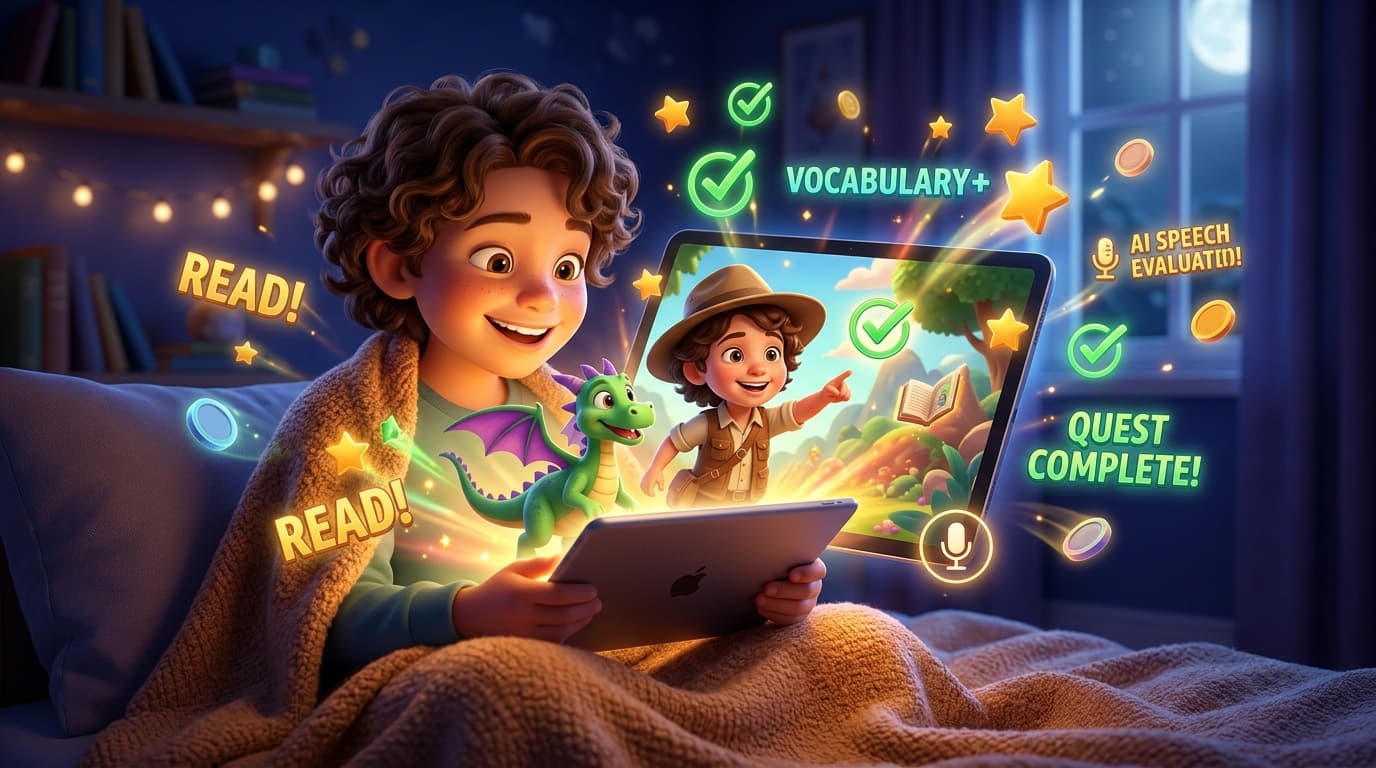
By switching from mindless videos to interactive reading quests for kids, parents can turn screen time into an active, high-reward learning adventure. When daily reading feels like an exciting game quest, children stop skipping tricky words and start building genuine, long-term reading comprehension.
The Shift: From Passive Media to Gamified Reading
When children watch videos online, they absorb information in a purely passive state. They do not have to decode sentences, analyze character motivations, or make narrative choices to move forward. While the bright visuals hold their attention, the experience does very little to improve their vocabulary or phonetic awareness.
Integrating gamified reading for kids flips this dynamic upside down. Instead of sitting back and watching a story happen on a screen, the child becomes an active participant in driving the adventure forward.
To progress through the narrative, children must actively engage with the material:
• Read sentences out loud to unlock new story pages.
• Solve quick vocabulary challenges embedded directly into the storyline.
• Answer interactive comprehension questions to earn star points and unlock achievements.
When reading requires direct input, a child's brain stays fully active. They are no longer just looking at pictures on a screen; they are actively processing meaning, learning new words in context, and practicing pronunciation with enthusiasm.
The Power of Personalization: Making Your Child the Hero
Why do traditional reading apps often fail to hold a child's interest after a few days? Because they rely on generic pre-drawn characters that kids quickly get bored with. Real, lasting motivation happens when a child sees themselves directly inside the narrative.
With specialized publishing platforms like Littale, creating a custom main character takes only a single photograph upload. Advanced photo-to-hero identity locking converts that picture into a stylized 3D cartoon hero that matches your child's likeness across every page, eliminating the face-shifting issues that plague generic AI image engines.
When children open a browser-native 3D flipbook reader and see their own face starring on the cover and throughout the adventure, their eyes light up instantly. They are no longer reading about a distant, unfamiliar character—they are leading their own heroic mission. That personal emotional connection transforms reading practice from a daily chore into an empowering experience they eagerly look forward to every day.
How AI Reading Tools Transform Quests into Play
Building strong literacy skills requires more than just memorizing sight words—it requires understanding what those words mean within a story. Modern AI reading comprehension for kids makes this learning process seamless, intuitive, and fun.
Rather than interrupting the story with boring end-of-chapter quizzes, interactive quests weave reading comprehension games for children directly into the natural flow of the book.
Real-Time AI Speech Evaluation
As your child reads aloud, built-in speech recognition listens to their voice. It provides instant visual feedback, highlighting correctly spoken words in green to build confidence, while offering gentle hints for tricky pronunciations.
Embedded Vocabulary Challenges
Instead of memorizing static flashcard lists, children encounter vocabulary games for kids right when a new word appears in the story. Unlocking a secret door or helping a storybook friend might require selecting the correct synonym or matching a word to its definition, ensuring the meaning sticks in their memory.
Gamified Milestones and Leaderboards
Every completed page and solved reading puzzle earns star points. Whether your child is reading independently at home or participating in classroom reading quests shared via simple 32-character links, climbing the leaderboard provides a healthy sense of accomplishment that keeps them motivated.
From Screen to Shelf: Bringing the Quest to Life
The best part of an interactive reading quest is that the learning journey does not have to remain locked behind a digital screen. Once your child finishes their digital adventure, you can review the complete interactive 3D flipbook preview together.
If the story becomes a cherished family favorite, you can seamlessly convert that digital file into a high-quality physical hardcover book. Through direct supply-chain integration with Lulu.com, your personalized storybook is printed on demand and delivered right to your front door.
Holding a physical hardcover book where they star as the main hero creates a powerful bridge between digital interactive play and traditional offline reading. It becomes a lasting keepsake that your child will proudly read aloud to parents, grandparents, and classmates over and over again.
Comments(0)
No comments yet. Be the first to share your thoughts.