


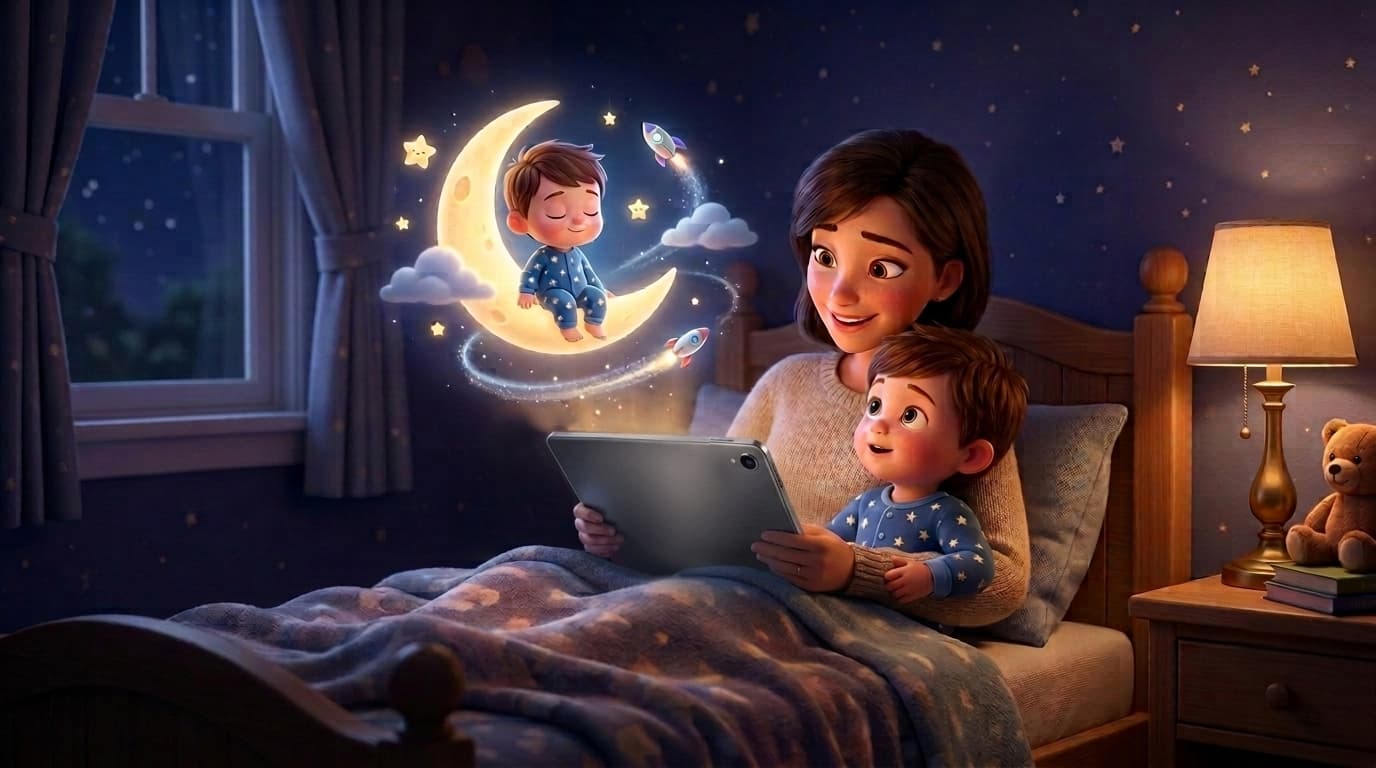
How to Write a Bedtime Story for Kids Starring Your Own Child
The Evening Challenge: Calming a Restless Toddler
For many parents, bedtime is the most exhausting part of the day. You spent hours managing work, meals, and endless play, only to face an energetic toddler who suddenly demands five more minutes of playtime, three extra cups of water, and endless stall tactics.
Traditional storybooks are wonderful, but after reading the exact same book fifty times, even the most patient parent can feel burnt out. More importantly, generic stories with unfamiliar characters don't always catch a young child's attention when their mind is racing with daytime excitement.
Learning how to write a bedtime story for kids isn't about becoming a professional author or spending hours typing out chapters. It is about creating a gentle, peaceful narrative arc that captures your child's imagination and signals to their brain that it is time to rest.
When you center the narrative around your child as the main hero, bedtime shifts from a nightly power struggle into a comforting, high-trust ritual that both you and your child look forward to every evening.
How to Choose a Bedtime Story Theme That Actually Soothes
The key to a successful bedtime narrative is pacing. While daytime stories thrive on high-stakes adventure, villains, and energetic action, a bedtime story needs gentle progression, quiet rhythm, and a peaceful resolution.
Understanding how to choose a bedtime story theme begins with selecting calming, predictable environments that naturally transition into rest:
• The Starlight Voyage: Floating gently through a quiet night sky, visiting sleepy stars and saying goodnight to the moon.
• The Whispering Forest: Walking through a soft, mossy forest where cozy woodland animals are snuggled in their dens.
• The Ocean Drift: Gliding safely on a warm, calm wave alongside friendly sea creatures getting ready to sleep.
When designing or selecting these narrative themes, avoid unexpected surprises or loud conflict. The goal is to establish a rhythmic rhythm where every page turn becomes slightly quieter, slower, and more relaxing than the last.
The Magic of Personalization: Making Your Child the Hero
If you want to know how to make a story about your child that truly holds their attention, visual connection is everything. Toddlers and preschoolers are naturally self-focused—they connect most deeply with images and stories that reflect their immediate world.
Learning how to make a personalized storybook used to mean buying expensive pre-printed books with simple name-swaps over rigid cartoon templates. Today, modern AI technology allows you to turn a single photograph into a fully customized 3D cartoon character that stays locked across every scene.
When a toddler opens a storybook and sees their own face starring as the cozy astronaut or sleepy forest explorer, their eyes light up with instant recognition. Because the main hero looks exactly like them, they internalize the character's journey. When the storybook hero lies down to rest under a warm blanket at the end of the quest, your child feels naturally inspired to do the exact same thing in real life.
Essential Tips for Reading with Toddlers at Night
Even the best story needs the right environment to work its magic. Here are proven, practical tips for reading with toddlers to create a peaceful evening wind-down routine:
1. Lower the Lights and Volume
Dim the room lighting and lower your voice pitch as you read. A slow, rhythmic whisper signals to your child's nervous system that the environment is safe and restful.
2. Let Them Turn the Pages
Whether using an interactive 3D flipbook on a screen set to warm night-mode or holding a physical book, giving your child control over turning the pages keeps their hands busy and prevents restlessness.
3. Use Gentle Speech Evaluation Demos
If you are exploring digital interactive quests before final bedtime, let your child speak soft words out loud. Encouraging quiet pronunciation practice builds literacy skills while naturally slowing down their breathing rate.
4. Transition from Screen to Shelf
While digital 3D flipbook previews make editing and customizing your story effortless, a physical hardcover book is ideal for the final bed-side read. Ordering a printed copy ensures a cozy, screen-free atmosphere right before your child drifts off to sleep.
Create Your Child's Bedtime Adventure Today
Creating a soothing, personalized story for your child doesn't require hours of writing or complex technical skills. With platforms like Littale, you simply upload a photo, choose a calm bedtime theme, and let our photo-to-hero system build a beautiful 22-page storybook instantly.
Transform your evening routine from a daily struggle into a magical memory you will cherish forever. Visit the My Character hub on Littale.com today, upload a photo, and preview your child's personalized bedtime storybook in seconds!
Comments(0)
No comments yet. Be the first to share your thoughts.