


How to Help a Child with ADHD Focus on Reading: 5 Proven Strategies
The Attention Crisis in Early Reading
For parents of children with ADHD or short attention spans, sitting down to read a traditional book can feel like an uphill battle. Dense pages, long text blocks, and static illustrations quickly cause focus fatigue, leading to fidgeting, frustration, and reading avoidance.
Traditional reading advice often fails neurodivergent kids because standard books offer passive consumption. Children with ADHD thrive on active participation, immediate feedback, and high visual stimulation.
To build lasting literacy skills, parents need targeted strategies that turn reading into an engaging, multi-sensory challenge.
1. Break Reading into Bite-Sized Interactive Quests
Expecting a child with ADHD to read for 30 uninterrupted minutes often leads to sensory overload. Instead, break reading time into short 5-minute micro-challenges that offer clear, immediate goals.
Use high-engagement reading activities for short attention span learners:
• Sentence Rearranging: Challenge your child to solve drag-and-drop plot puzzles after every few pages.
• Fast True or False Runs: Fire off rapid 3-question recall checks right after completing a passage.
• Context Fill-in-the-Blanks: Have your child guess missing action words to keep their brain actively predicting the story outcome.
2. Lock Focus with Visual Character Representation
Children with ADHD pay significantly closer attention when the material feels personally relevant to them. Placing a character on the page that visually matches your child creates an instant anchor for focus.
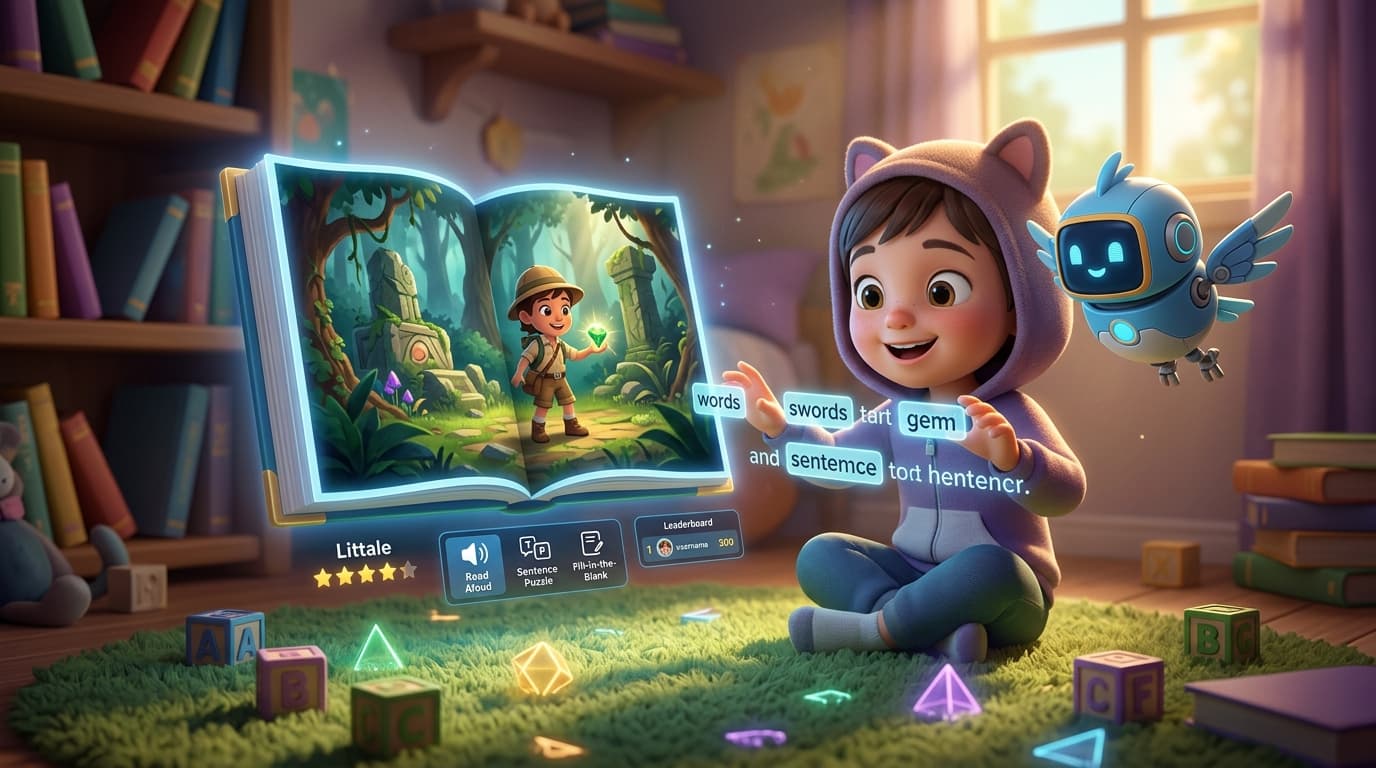
Using personalized interactive storybooks for kids ensures that your child sees themselves as the hero in every scene. When a child sees their own visual appearance exploring space or solving mysteries, their internal motivation to read the next sentence skyrockets.
3. Use Auditory Voice Feedback for Active Engagement
Kinesthetic and auditory learners focus best when they interact with text using their voice. Allowing children to record their own voice reading short story passages keeps them actively involved in the process.
Reviewing color-coded vocal feedback gives neurodivergent learners immediate visual proof of their speech accuracy, turning pronunciation practice into an empowering self-monitoring game.
4. Leverage Tactile 3D Flipbooks and Physical Books
Screen-based reading often leads to digital distraction if kids can easily swipe away to other apps. Using structured 3D digital flipbooks with realistic page-turning physics keeps tech-savvy kids focused on the reading task.
Transitioning from digital story creation to physical printed books gives tactile learners something concrete to hold, fostering screen-free focus during evening wind-down hours.
Transform ADHD Reading Struggles with Littale
Implementing effective adhd friendly reading strategies does not require complicated lesson planning. Littale.com provides a gamified edutainment platform built to keep high-energy minds engaged.
With Littale, parents can transform their child's photo into a custom cartoon hero in under 3 minutes, generating a complete 22-page personalized storybook. Each story comes equipped with 5 built-in AI Learning Quests—including Read Aloud speech analysis, Sentence Rearrange, True/False, Fill-in-the-Blanks, and Multiple Choice challenges. Custom digital creations can also be printed as physical keepsake books via Lulu.com, giving your child a tangible trophy of their reading achievements.
Comments(0)
No comments yet. Be the first to share your thoughts.